

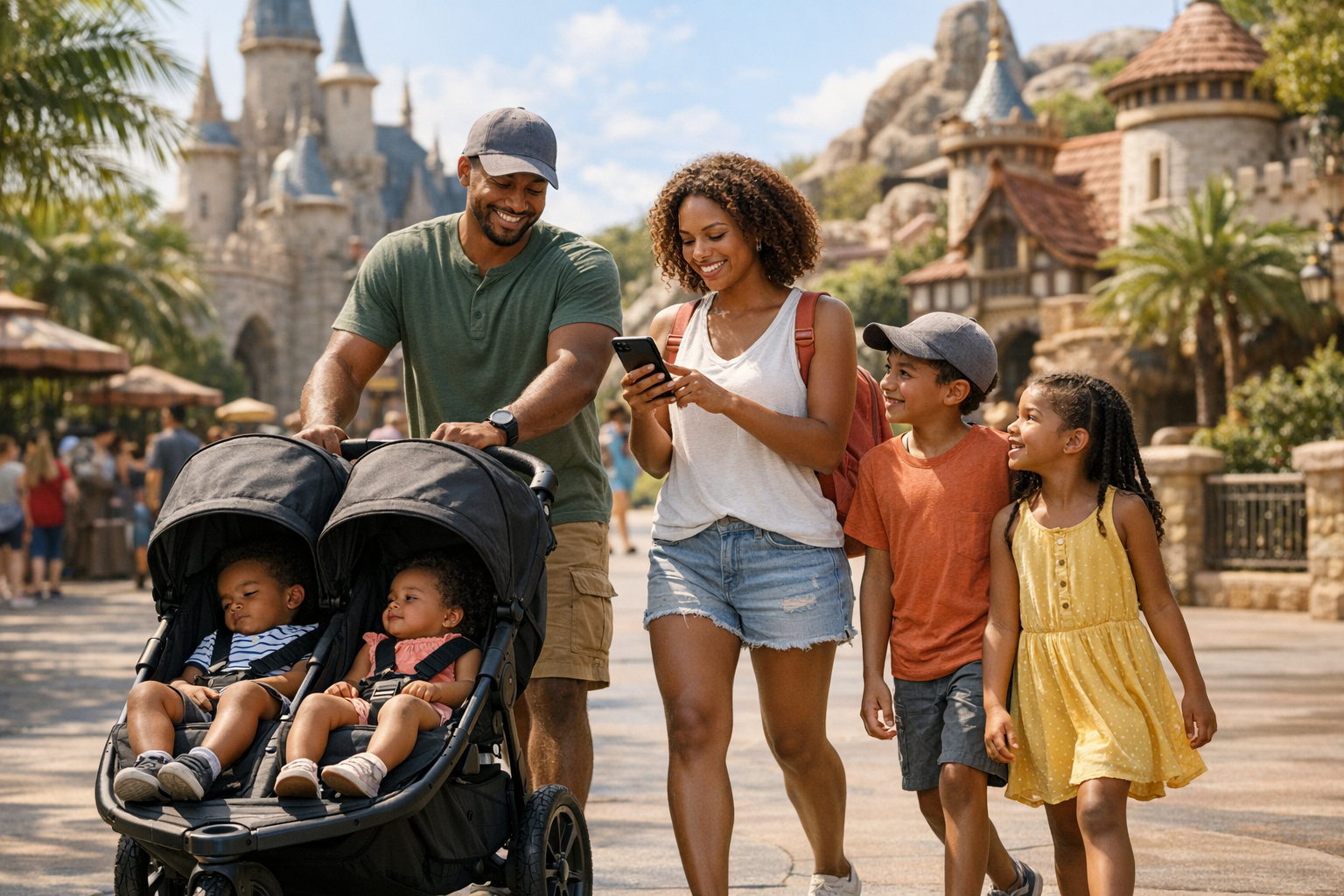
How to Use Lightning Lane Multi Pass at Disney World Without Pushing Your Stroller Across the Park All Day
If you’re planning to use Lightning Lane Multi Pass with stroller Disney World, you’ve probably already realized something: most advice focuses on getting the “best rides,” not on surviving the walking. And when you’re traveling with toddlers, long distances, midday heat, and nap schedules, walking becomes the biggest challenge of your day.
Lightning Lane Multi Pass is a powerful tool, but families often end up zigzagging across the park just to chase return times. That means extra miles, cranky kids, missed naps, and a stroller that suddenly feels a lot heavier than it did at rope drop.
This guide flips the strategy. Instead of chasing rides, you’ll plan your day around smart route planning—keeping your family in one area at a time, reducing backtracking, and making your park day feel manageable.
Why Lightning Lane Planning Feels Harder with a Stroller
The hidden problem: backtracking across large parks
Disney parks are bigger than they look on a map. A Lightning Lane return time might seem convenient—until you realize it’s on the opposite side of the park.
Without a stroller, that’s just a long walk. With a stroller, it becomes:
- Navigating crowds and tight walkways
- Stopping for snacks, bathroom breaks, or meltdowns
- Lifting or maneuvering around curbs, ramps, and queues
Backtracking even two or three times in a day can easily add miles to your total walking distance.
Why toddlers and long walking distances don’t mix
Young kids don’t pace themselves. They sprint, stop, snack, and crash. That makes long, inefficient routes especially exhausting.
When your Lightning Lane strategy ignores distance, you often end up with:
- Missed return windows because it takes too long to get there
- Interrupted naps in the stroller
- Overstimulated, overtired kids by early afternoon
This is why a Disney Lightning Lane stroller strategy has to prioritize flow—not just ride popularity.
The Core Rule: Group Your Lightning Lanes by Land
What “ride clustering” means in each park
The single most important rule: book rides that are physically near each other. Think of each park as a set of “zones” or lands, and try to stay within one zone for as long as possible.
This is called ride clustering, and it’s the key to avoiding unnecessary walking.
Examples from Magic Kingdom, EPCOT, Hollywood Studios
Here’s how clustering works in practice:
- Magic Kingdom: Fantasyland, Tomorrowland, Frontierland, Liberty Square
- EPCOT: World Celebration, World Nature, World Discovery, World Showcase
- Hollywood Studios: Toy Story Land, Sunset Boulevard, Galaxy’s Edge
Instead of booking one ride in Fantasyland, one in Frontierland, and one in Tomorrowland, aim for two or three within the same land or adjacent areas.
This simple shift dramatically reduces how much you push your stroller across the park.
Planning a Disney World trip with small children usually means long walking days, stroller parking, transportation and tired kids. Booking a <a href=”https://www.strollerfy.com/stroller-rental-disney-world/”>stroller rental for Disney World</a> before your trip helps your family arrive prepared.
How to Book Your First 3 Lightning Lanes Strategically
Start with one land, not scattered rides
When you make your initial selections, resist the urge to grab the most popular rides across the park. Instead, pick a starting land and build around it.
For example, in Magic Kingdom, you might focus entirely on Fantasyland in the morning.
Prioritizing rides near each other vs. “top” rides
This is where many families go wrong. Yes, popular rides matter—but not at the expense of your entire day’s flow.
It’s often better to:
- Ride three nearby attractions smoothly
- Stay in one area with minimal walking
- Keep kids happy and rested
…than to rush across the park for a single “must-do” ride and disrupt your schedule.
Sample morning booking strategy for families
A practical approach might look like this:
- Book 2–3 rides in the same land between early morning and late morning
- Leave space for snacks, bathrooms, and unplanned stops
- Start booking your next Lightning Lane once you tap into your first ride
This creates a natural rhythm instead of a stressful race.
Stroller-Friendly Park Routing (Real Examples)
Magic Kingdom: Fantasyland → Liberty Square flow
Start your morning in Fantasyland. This area is packed with family-friendly rides and close together, making it ideal for stroller navigation.
After completing your clustered rides, move gradually toward Liberty Square. This transition feels natural, avoids backtracking, and keeps your walking distance manageable.
You can then pause for a snack or indoor attraction before deciding your next move.
EPCOT: World Celebration → World Nature loop
EPCOT can feel especially spread out, which makes route planning critical.
Start in World Celebration, then move into World Nature. These areas connect easily and allow you to build a smooth loop instead of crossing the park multiple times.
This is a great place to plan a mid-morning break, since many attractions here offer indoor space and shade.
Hollywood Studios: Toy Story Land → Sunset Blvd route
Hollywood Studios is smaller but more congested, which makes stroller navigation tricky.
Begin in Toy Story Land, then work your way toward Sunset Boulevard. This creates a natural flow across the park instead of forcing you to double back through crowded walkways.
Plan a show or indoor attraction along the way to give kids a reset.
When to Break the Rules (and Cross the Park)
Must-do rides that justify the walk
Sometimes, a ride is worth it. If your family has a top priority attraction, it’s okay to cross the park—but do it intentionally.
Limit these long walks to once or twice per day, not repeatedly.
How to pair long walks with snack or rest breaks
If you’re heading across the park, build in a reward:
- Stop for a snack along the way
- Schedule a shaded rest area
- Use the time for a stroller nap
This turns a tiring walk into a manageable transition.
Using shows and indoor attractions to reset kids
Indoor shows are your secret weapon. They provide:
- Air conditioning
- Seating
- A mental reset for overstimulated kids
Use them strategically between lands to break up your day.
How to Stack Lightning Lanes Without Exhausting Your Kids
Midday stacking for post-nap energy
Instead of running around all day, consider slowing down in the afternoon and stacking Lightning Lanes for later.
This works especially well if your child naps in the stroller or you return to your hotel midday.
Avoiding tight return windows with stroller naps
Tight schedules and naps don’t mix. Choose return windows that give you flexibility.
If your child falls asleep, you don’t want to rush across the park to make a ride.
Timing rides around shade and heat
Florida heat is real, especially for young kids. Try to:
- Schedule outdoor walking earlier or later in the day
- Use midday for indoor rides or shows
- Stay in shaded lands during peak heat
This keeps everyone more comfortable and reduces fatigue.
Where Stroller Rentals Make This Strategy Easier
Why comfortable strollers matter for longer routing days
If you’re minimizing backtracking, you’ll still be covering ground—but in a smarter way. A comfortable stroller makes a huge difference.
Look for features like:
- Good sun coverage
- Smooth maneuverability
- Space for snacks, bags, and souvenirs
When kids will ride vs. walk (and why it matters)
Even kids who walk at home will need the stroller more than you expect. Between crowds, heat, and long distances, they’ll ride often.
Plan your route assuming they’ll be in the stroller most of the time.
Practical tip: always assume more sitting time than expected
Overestimate how much your child will need the stroller. It helps you plan realistic distances and avoid pushing too far.
Common Mistakes Families Make
Booking rides all over the park
This is the biggest mistake. Scattered bookings lead to constant backtracking and unnecessary walking.
Ignoring walking time between return windows
It takes longer than you think to move across a Disney park with a stroller. Always factor in travel time.
Overpacking the schedule
Trying to do too much leads to stress. A smoother, slower day is often more enjoyable—and more successful.
Simple 1-Day Lightning Lane Plan for a Family with a Stroller
Step-by-step example (morning to afternoon)
Morning: Arrive early and focus on one land (for example, Fantasyland). Use your first Lightning Lanes here and ride nearby attractions.
Late morning: Gradually move to an adjacent land. Book your next Lightning Lane in that direction.
Midday: Take a break—either in the park (indoor attractions, lunch) or back at your hotel.
Afternoon: Return with stacked Lightning Lanes in a new area, but keep them close together.
Built-in breaks, snacks, and rest time
This plan naturally includes downtime, which is essential for families with young children. It prevents burnout and keeps the day enjoyable.
Make Your Park Day Easier from the Start
Using Lightning Lane Multi Pass effectively isn’t about racing across the park—it’s about moving through it intelligently. When you group rides by location, build in breaks, and plan around your child’s energy, the entire day becomes smoother.
This approach to Disney park route planning stroller use doesn’t just save steps—it helps your family stay happier, more relaxed, and actually enjoy the experience.
And when your stroller is comfortable, easy to push, and built for long park days, everything becomes even easier.
Make Your Orlando Trip Easier With Strollerfy
Long park days can be tiring for young children. A premium stroller can help your family move around Orlando’s parks, shopping areas, and attractions with more comfort, easier naps, and less stress.
FAQ: Lightning Lane Multi Pass with a Stroller at Disney World
Is Lightning Lane Multi Pass worth it for families with toddlers?
Yes, especially when used with a smart routing strategy. It reduces wait times, which helps prevent meltdowns and keeps your day more predictable.
How far apart should Lightning Lane rides be?
Ideally, they should be within the same land or adjacent areas. This minimizes walking and makes it easier to stay on schedule.
Can I still get popular rides without crossing the park?
Sometimes, but not always. You may need to prioritize either convenience or specific rides. For most families, convenience leads to a better overall experience.
What’s the best time to cross the park if needed?
Mid-morning or late afternoon works best. Avoid peak heat and crowds whenever possible, and pair long walks with breaks.
Do kids nap well in strollers at Disney World?
Many do, especially with a comfortable stroller and good shade. Planning around stroller naps can make your day much smoother.
For one child, a single stroller rental in Orlando can be easier to handle through busy park areas.