

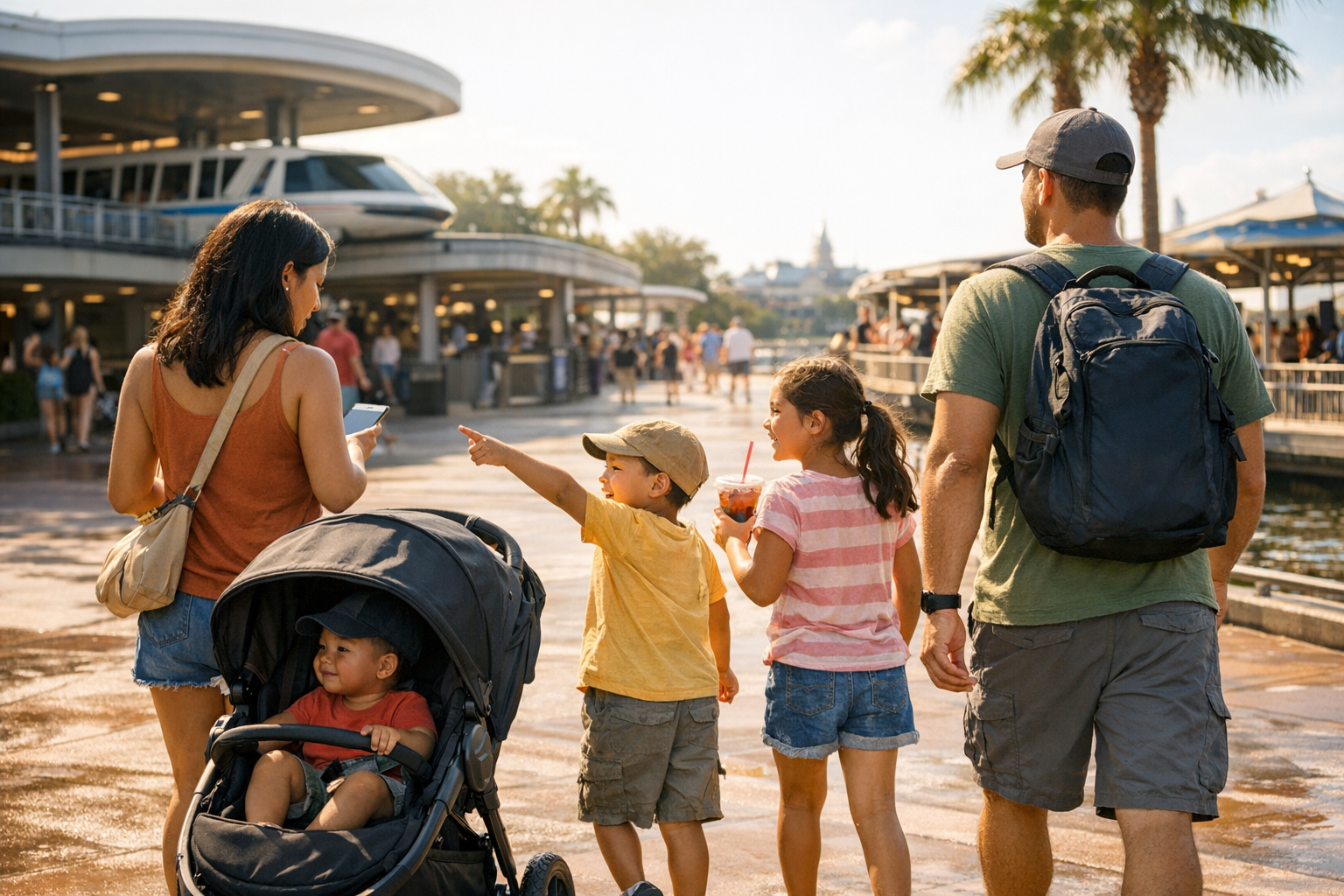
Disney World Park Hopping in 2026: How It Actually Works for Families (and When It’s Worth It)
Park Hopper sounds like the ultimate Disney upgrade—more flexibility, more rides, more magic. But for families traveling in 2026, especially with young kids, the reality is a little more complicated. The Disney World park hopper rules 2026 are more flexible than they used to be, but that doesn’t automatically make Park Hopper the best choice for every day of your trip.
Many parents assume park hopping means freedom to bounce between parks all day. In practice, transportation time, Lightning Lane timing, and simple kid energy levels can turn that “flexibility” into a long, exhausting day.
This guide breaks down exactly how park hopping works now—and more importantly, how to use it in a way that actually fits real family travel.
How Disney World Park Hopping Works in 2026
Entry rules and timing basics
In 2026, park hopping is much simpler than it was a few years ago. If you have a Park Hopper ticket, you can generally visit multiple parks in one day without waiting until a specific afternoon start time.
Here’s the key idea: you still start your day at one park, but after you’ve entered that first park, you’re free to hop to another park whenever you choose, as long as that park isn’t at capacity.
For families, this is important because it means you can adjust your day in real time. If your toddler melts down at Magic Kingdom by 1:30 pm, you’re not locked in—you can leave, rest, and head somewhere else later.
That said, “anytime” doesn’t mean “easy.” You still need to factor in:
- Travel time between parks (often 30–60 minutes door-to-door)
- Security and entry lines at the second park
- Your kids’ energy and patience levels
Reservation requirements explained simply
For most standard date-based tickets, Disney has removed the need for park reservations. That means you don’t usually need to pre-select your first park in advance.
However, some ticket types and special situations may still require reservations, so it’s always worth checking your specific ticket details through the official Disney ticket page.
The practical takeaway for families: planning is still essential, even if reservations are less of a factor. Your first park choice sets the tone for your entire day.
The Biggest Mistakes Families Make with Park Hopper
Overestimating how much you can do
This is the most common trap. Parents picture doing a “little bit of everything”—morning at Animal Kingdom, afternoon at Hollywood Studios, fireworks at Magic Kingdom.
In reality, each park is massive. Walking distances are long, wait times fluctuate, and kids need breaks.
Trying to do two full parks in one day usually leads to:
- Skipped attractions
- Rushed meals
- Overtired kids by late afternoon
Instead of feeling like you maximized your ticket, it can feel like you didn’t fully enjoy anything.
Losing time in transportation
Park hopping isn’t instant. Even in the best-case scenario, you’re looking at:
- Walking to transportation
- Waiting for a bus, Skyliner, boat, or monorail
- Travel time itself
- Entry lines at the next park
That can easily eat up an hour—or more during busy times.
For families with young children, that’s often the exact window when kids get hungry, tired, or overstimulated.
Planning a Disney World trip with small children usually means long walking days, stroller parking, transportation, and tired kids. Booking a stroller rental for Disney World before your trip helps your family arrive prepared.
When Park Hopper Is Actually Worth It for Families
Splitting long days into two shorter park visits
This is where Park Hopper really shines.
Instead of trying to conquer one park from rope drop to fireworks, you can split your day:
- Morning: park with shorter lines or cooler temperatures
- Midday: hotel break, nap, or pool time
- Evening: second park for a few key attractions or shows
For example:
- Start at Animal Kingdom early (it opens earlier and gets hot fast)
- Leave by early afternoon
- Rest at your hotel
- Head to EPCOT in the evening for food and a relaxed atmosphere
This approach feels dramatically less exhausting for kids—and parents.
Dining, shows, and nighttime strategy
Park Hopper is also useful if your priorities are very specific.
Examples where it makes sense:
- You want dinner at EPCOT but spent the day elsewhere
- Your child only cares about one ride in another park
- You want to end your day with a particular nighttime show
In these cases, you’re not trying to “do another park”—you’re just adding a targeted experience.
When You Should Skip Park Hopper (Especially with Young Kids)
Nap schedules and overstimulation
If you’re traveling with toddlers or preschoolers who still nap, park hopping can work against you.
Why? Because the ideal hop time—mid to late afternoon—is exactly when young kids need rest.
Skipping naps to squeeze in another park often leads to:
- Meltdowns during dinner
- Refusal to walk or cooperate
- Missing the very experiences you planned the hop for
For many families, going back to the hotel and staying there is the better move.
Why one park per day is often easier
There’s a reason experienced Disney parents often recommend one park per day.
It allows for:
- A slower pace
- Flexible breaks inside the same park
- Less pressure to “move on”
Magic Kingdom alone can fill an entire day for a young child. Trying to add another park on top of that rarely improves the experience.
If your kids are under 6, Park Hopper is usually something to add selectively—not automatically.
Best Park Hopping Strategies That Work in Real Life
Late afternoon hop plan
This is the most realistic and family-friendly strategy.
Start your day early at your primary park. Focus on your top priorities while energy levels are high. Around early afternoon:
- Head back to your hotel
- Rest, nap, or swim
- Return to a second park around late afternoon or early evening
This avoids peak heat and crowds while giving everyone a reset.
It also turns the second park into a low-pressure experience instead of a race.
“Second park for evening only” strategy
This is even simpler—and often more enjoyable.
Instead of trying to do two full parks, you treat the second park as an evening destination.
Good examples:
- EPCOT for dinner and strolling
- Hollywood Studios for a nighttime show
- Magic Kingdom just for fireworks
You’re not trying to maximize rides—you’re adding atmosphere and memorable moments.
This strategy works especially well for families who want variety without exhaustion.
Transportation Tips That Make or Break Your Day
Bus vs Skyliner vs Monorail timing
Not all park-to-park transfers are equal.
Some are relatively smooth:
- EPCOT to Hollywood Studios via Skyliner or boat
- Magic Kingdom to EPCOT via monorail (with transfer)
Others can be slower:
- Animal Kingdom to anywhere (bus only)
- Resort transfers during peak times
If your plan requires a long bus ride in the middle of the afternoon, that’s where park hopping can start to feel frustrating.
Minimizing walking and wait time
Every park day already involves miles of walking. Adding a second park increases that significantly.
To make hopping smoother:
- Leave before your kids are exhausted—not after
- Have snacks ready during transportation
- Avoid hopping during peak heat if possible
- Choose parks with easier connections when you can
Small logistical choices make a big difference in how your day feels.
How Lightning Lane Works When Park Hopping
Lightning Lane planning is one of the biggest factors in whether park hopping actually works.
In general:
- You can book Lightning Lane selections for different parks
- After you’ve used your first selection, you can continue booking more—even in another park
- Return times matter more than park order
For families, this means you can stack later return times at your second park while you’re still in your first park.
Example:
- Morning: use Lightning Lanes at Magic Kingdom
- Midday: book evening Lightning Lanes at EPCOT
- Evening: hop and use those reservations
The catch is timing. If your return windows overlap with travel or tired-kid moments, you can end up missing reservations.
Park Hopper works best when your Lightning Lane strategy is simple and intentional—not overloaded.
FAQ: Disney World Park Hopper Rules 2026
Can you park hop anytime at Disney World in 2026?
Generally, yes. Once you’ve entered your first park of the day, you can hop to another park at any time, subject to capacity. There’s no fixed afternoon start time like in previous years, but transportation and crowd levels still affect how practical it is.
Do you need a park reservation for both parks?
In most cases, no. Standard date-based tickets don’t require park reservations. You simply enter your first park and then hop to another. Always double-check your specific ticket type to be sure.
Is Park Hopper worth it with toddlers or young kids?
Often, no—at least not for every day. Young kids benefit from slower pacing, naps, and less transportation. Park Hopper can work well for specific days or flexible evening plans, but it’s not always worth the added cost for families with very young children.
What’s the best time of day to switch parks?
Late afternoon or early evening tends to work best. It allows for a midday break and avoids peak heat. Hopping too early usually adds stress without adding much value.
How does park hopping affect Lightning Lane planning?
You can book Lightning Lane selections across parks, but timing is everything. Many families book morning rides in their first park and evening rides in their second park to make hopping smoother.
Final Thoughts: Flexibility Only Works If You Use It Wisely
Park Hopper isn’t a bad choice—it’s just often misunderstood.
For families, it works best when used with intention, not ambition. The goal isn’t to do more parks. It’s to create a day that feels manageable, flexible, and enjoyable for everyone.
If you plan your day around your kids’ energy—not just ride lists—you’ll get far more value out of park hopping than trying to “see everything.”
If you are staying at a hotel, resort, or vacation home, booking a stroller rental in Orlando before arrival can make the first park day easier.
Families with one child may want to consider a Baby Jogger City Mini Single Stroller Rental in Orlando for smoother rides during long theme park days.